When applying for academic opportunities, having a well-structured and optimized research CV is crucial. Your CV is the first impression on potential reviewers, and a cluttered or irrelevant format can hinder your chances. Here’s a step-by-step guide to crafting the perfect research CV.
Essential Components of a Research CV
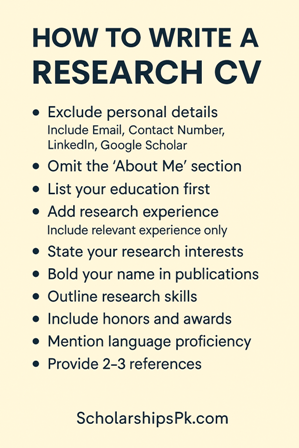
Avoid Unnecessary Personal Information
Many candidates include irrelevant personal details in their CVs. Here’s what you should and shouldn’t add:
- Do Not Include:
- Date of birth
- Gender/Sex
- Nationality
- Place of birth
- Include Instead:
- Email Address
- Contact Number
- LinkedIn Profile (hyperlinked)
- Google Scholar Profile (hyperlinked)
Skip ‘About Me’ or ‘Objective’ Sections
For research CVs, sections like “About Me” or “Objective” are unnecessary. Focus on the specifics that demonstrate your academic and research qualifications.
Key Sections to Include in Your Research CV
1. Education
- List your education in chronological order, starting with the most recent:
- PhD Applicants: Include MS and BS degrees.
- MS Applicants: Include BS and optionally, FSc.
- Format Example:
JAVA
- MS in Computer Science (2020-2024)
- XYZ University
- CGPA: 3.8/4
2. Research Experience
Highlight your research work with clear details:
- For MS Applicants:
Title this section as “Graduate Research Experience” and add bullet points for your MS work. - For BS Applicants:
Title this as “Junior Researcher (BS Thesis)” and include bullet points for your final year project or thesis.
3. Relevant Work Experience
Include only positions relevant to the role you’re applying for:
- Position Title
- Institution Name
- Responsibilities (in bullet points)
4. Research Interests
Detail your areas of interest concisely to show alignment with the institution or program.
5. Publications
- List publications in a structured format.
- Highlight your name in bold to show authorship.
Apply For: Fully Funded Youth Empowerment Forum (YEF) 2025: Fly to Switzerland for FREE!
Additional Sections to Enhance Your CV
Research Skills
- Include tools, methodologies, or software relevant to your field of study.
Honors and Awards
Mention:
- Scholarships
- Grants
- Certifications
Language Skills
- Detail your proficiency levels for relevant languages.
References
- Provide 2-3 references from professors, along with their contact details.
- Avoid writing “Available upon request.”
Optional: Major Courses
- If your CV is short, include a section listing your major academic courses relevant to the field.
Formatting Tips for a Professional Research CV
- Keep it Concise:
- PhD CV: Maximum 3 pages.
- MS CV: Maximum 2 pages.
- Use Bullet Points:
- Avoid long paragraphs.
- Maintain a Clean Layout:
- Use consistent fonts and proper alignment.
- Highlight Key Information:
- Use bold and italics sparingly to draw attention to important details.
Check a CV Sample: CV for PhD in Lithium Ion Battery Research – Enhance Electric Vehicle Performance